What a Difference a Case Made: Chronicle of a Failure
-
- INTRODUCTION
In the 2012/13 academic year, a team of lecturers from the Department of Economics at the University of Barcelona (UB) decided to introduce the case-study methodology into the course Economic Evaluation of Public Policies (EEPP) taught in the last year of the undergraduate degree in Political and Administrative Sciences. The main objectives were to increase student motivation in an economics-based course taught to non-economists, to foster teamwork competences, and ultimately to improve content acquisition in ways that would enhance academic performance.
The successful outcomes achieved in the 2012/13 academic year were described in Choi et al. (2014). However, although the experience proved optimal in its initial years, a progressive deterioration was subsequently observed both in performance and student feedback. This situation, which took place under changing institutional constraints, prompted a reconsideration of the teaching methodology, leading to a return to more traditional methods of delivery and assessment. This paper examines the factors underlying this evolution and reflects upon the conditions required for the successful implementation of case-study methodology and addresses a relatively underexplored gap, the analysis of the failure and reversal of active learning methodologies. Therefore, the paper answers, through the analysis of a real-world university experience, the following research question: what are the necessary conditions for the success in the implementation of active learning techniques and, more specifically, case-study methodology? The central conclusion is that inconsistencies within the institution -between its demands for active learning strategies and its provision of supportive environments- may lead to a deterioration in student performance and render such strategies impossible to sustain effectively.
The paper is structured as follows: Section 2 briefly describes the application of case-study methodology in EEPP. Section 3 presents a set of indicators illustrating the evolution of the subject. Section 4 discusses these developments and analyses the underlying explanatory factors. Section 5 summarises the main conclusions.
- CASE-STUDY METHODOLOGY IN EEPP: A BRIEF REMINDER
2.1. The Course: The Original Design
The course was introduced in the new curriculum of the Political and Administrative Sciences degree in 2011/12. It is an optional subject of 3 ECTS credits and was initially offered to third-year students during the spring semester. Two groups were created -morning (M0) and afternoon (T0)- each capped at 30 students. Enrolment recommendations included prior completion of Public Economics course and a sufficient level of English to understand technical texts. A complicating factor was the students’ limited statistical background, reflecting the minor role of quantitative training in their degree programme. Case-study methodology was implemented as of 2012/13.
Each course comprised 15 sessions of 90 minutes. The syllabus was divided into four blocks. The first block (sessions 1-4) covered the essential knowledge on evaluation activity, its functions and typologies. The following two blocks followed a three-session structure: the first dedicated to the theoretical foundations of various evaluation techniques; the second to the discussion of real-world applications; and the third to a graded case study. The final block (sessions 11-15), devoted to impact evaluation, was organised as follows: sessions 11 and 13 were theoretical; sessions 12 and 14 analysed applications; and session 15 was devoted to a final graded case study. All materials were made available on the University of Barcelona’s Virtual Campus (MOODLE platform).
Students could choose between two assessment systems. The default was continuous assessment, in which coursework accounted for 70% of the final grade and a final case study for 30%. For coursework, only the two best marks out of three were considered. In accordance with Faculty regulations, students had to obtain at least 5/10 in the final test to pass. Alternatively, students could opt for a single-assessment system, in which the final grade depended solely on an individually resolved case study.
2.2. Case-Study Methodology
The case-study method is an active learning strategy (Grant, 1997), first developed in the late nineteenth century at Harvard Law School and later adopted by business schools (Walsh, 2008). It is based on the acquisition of knowledge and competences through the resolution of exercises that simulate real or hypothetical situations. Its potential advantages in higher education include the promotion of participation and debate (Fixen, 2024), improved academic performance (Bonney, 2015), enhanced problem-solving skills (Farashahi & Tajeddin, 2018), knowledge transfer (Berrell et al., 2001), and critical thinking development (Mahdi et al., 2020).
Anderson (2019) identifies five conditions for the successful application of this methodology. In first place, the relevance of cases to course content and learning objectives. The second and third conditions are establishing a clear link between theory and practice, and a framework that facilitates interpretation, respectively. An additional element is the adequate contextualisation of the case and, finally, incorporating some degree of ambiguity to stimulate critical thinking. Similarly, Toogood (2023) highlighted five comparable principles: Realism, as students prefer cases that present real-life situations; applicability, as students want cases that are relevant both to the subject and to real life; depth, considering that students engage more with complex and in-depth cases; appearance, that is, taking into account that the design, length and presentation of the cases influence student engagement; and providing sufficient reading time. All these elements were present in the methodology applied in EEPP.
An additional condition for the successful application of case-study methodology is class-seize. Wright et al. (2024) state that the optimal classroom size for supervised work is approximately 24 students. Bandiera et al. (2010) also point to the negative impact of exceeding the threshold of 33 students per class.
Given its applied nature and small class sizes, EEPP was an optimal candidate for the methodology. The graded cases met the criteria identified by Anderson (2019) and Toogood (2023), focusing on real Spanish public policies while adapting difficulty to the students’ limited statistical background. Cases, typically one page long with several questions, were resolved in groups of 3-4 (Laughlin et al., 2006), with free access to materials. Group composition varied -self-selected for the first case, randomly assigned thereafter- to simulate real labour-market dynamics. Exercises lasted 60 minutes and were followed by a joint discussion. Attendance was voluntary but high (frequently above 90% of the enrolled students). Mini-cases were integrated into lectures to reinforce skills.
The final case study (30% of the grade) was completed individually, both to comply with Faculty regulations and to identify high-performing students while discouraging free-riding behaviours. For the completion of the final case study, students were also allowed to use any materials they deemed appropriate.
2.3. Shifts From The Original Design
Between the 2012/13 and 2024/25 academic years, a series of adjustments were made to the course. Some of these changes were imposed by factors external to the teaching team, while others were introduced by the lecturers themselves to address problems identified in the implementation of teaching. In some cases, the latter adjustments were direct responses to the former.
The changes beyond the teaching team’s control were as follows:
- From 2013/14 onwards, the subject was offered in the spring semester of the fourth year, i.e. one year later. The rationale for this change was to increase the proportion of students who had already completed Public Economics. In 2012/13 it was observed that many students did not meet this requirement, since Public Economics was taught in the first semester of the fourth year of the Political and Administrative Sciences degree. This move was positive, as it improved the students’ background.
- From 2018/19 onwards, the course was moved to the autumn semester of the fourth year, to boost enrolment, which had been low due to timetable clashes with other optional subjects perceived by students as easier to pass. While this movement allowed the survival of the subject -in order to meet a minimum number of enrolled students-, it also led to dysfunctions linked to the increase in enrolment.
- From 2021/22 onwards, the afternoon group was rescheduled to midday (14:30-16:00, instead of the previous 18:00-19:30), with the objectives of optimising the use of faculty facilities and reducing timetable overlaps among the limited number of optional courses offered in the degree. This shift aimed to raise enrolment rates in the afternoon group.
- From 2021/22 onwards, the Faculty -without prior consultation with the lecturers- decided to open enrolment in the morning group (taught, it should be recalled, in English) to students from other degree programmes as well as to Erasmus students, given the scarcity of English-taught courses within the Faculty of Law. The Faculty of Law at UB encompasses Law, Criminology, Public Management and Administration, and Political and Administrative Sciences. This decision also led to a rise in enrolment, surpassing the original cap of 30 students and reaching up to 45 in 2023/24. This shift increased background hetereogeneity.
- It is worth noting that this course was not required to be taught online during the COVID-19 pandemic, since it was scheduled for the autumn semester.
The changes introduced by the teaching team over the years were as follows:
- Annual updating of case studies. This is needed for fulfilling the abovementioned conditions for the successful implementation of case-study methodology.
- Since 2014/15, attendance at a minimum of 80% of sessions was made compulsory, due to a decline in student attendance observed in 2013/14. Case-study needs class attendance.
- The subject is taught on Fridays in the autumn semester. Owing to the concentration of bank holidays in that semester, in most years the topic of qualitative evaluation has been omitted to allow more time for the remaining content.
- In 2024/25, the assessment system was revised, reverting to a more “traditional” model. Under this system, 50% of the grade derives from three in-class individual exercises, of which only the two best marks are counted. The remaining 50% comes from a final individual exam. Attendance at a minimum number of sessions is no longer required.
All in all, the accumulation of these shifts transformed in depth the course dynamics, both in in-class activities and in the evaluation system. As a whole, this had its reflection in the results presented in Section 3.
- EVOLUTION: INDICATORS
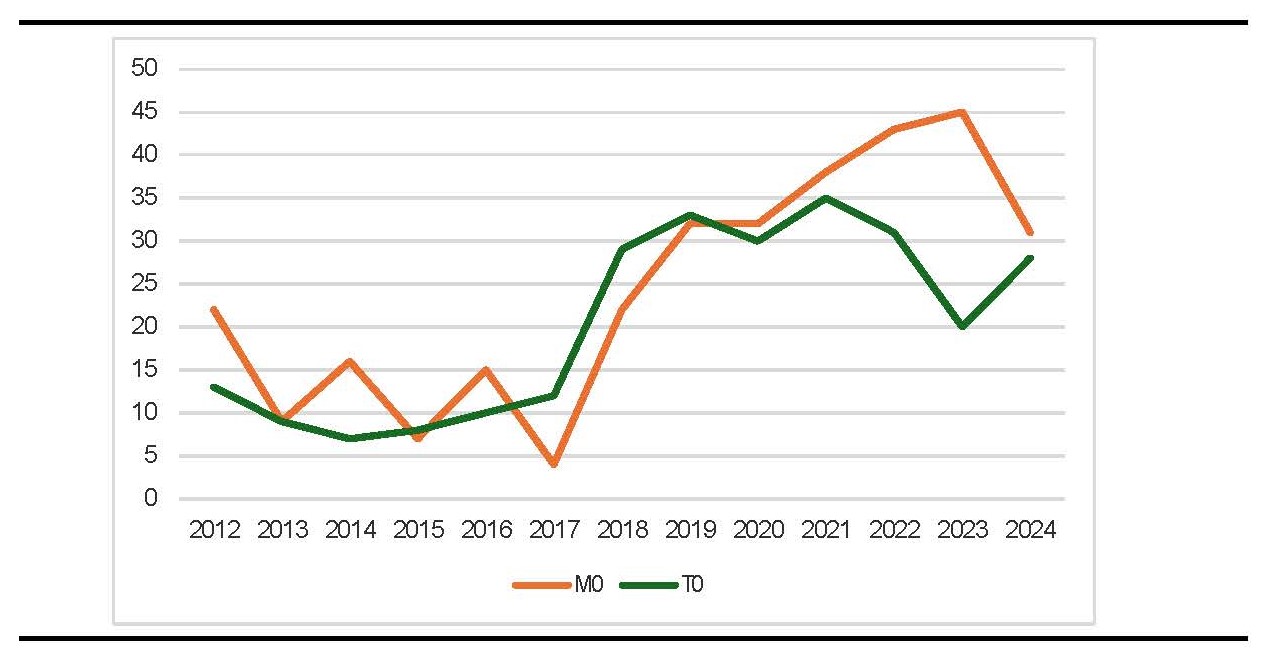
The changes described in the previous section had an impact on various dimensions. First, enrolment experienced a very significant increase, rising from very low levels -fewer than ten students per group in some years- to over 40 students in the morning group. This can be clearly seen in Figure 1. This evolution occurred in stages, with two clear turning points: first, in 2017/18, following the change of year and semester in which the course was offered, which reduced overlap with other courses; and second, in 2021/22, when enrolment was opened to students from other degree programmes and educational levels. The decrease in enrolment in the morning group since the 2022-23 academic year reflects the concerns raised to the Faculty by the teaching staff about the situation in previous years. Thus, enrolment reacted to the first type of shifts -those beyond the teaching team’s control- in the sense foreseen by the Faculty.
Figure 1. Students enrolled in the course Economic Evaluation of Public Policies, Groups M0 (morning) and T0 (afternoon), academic years 2012/13 to 2024/25.
Source: Authors’ own elaboration.
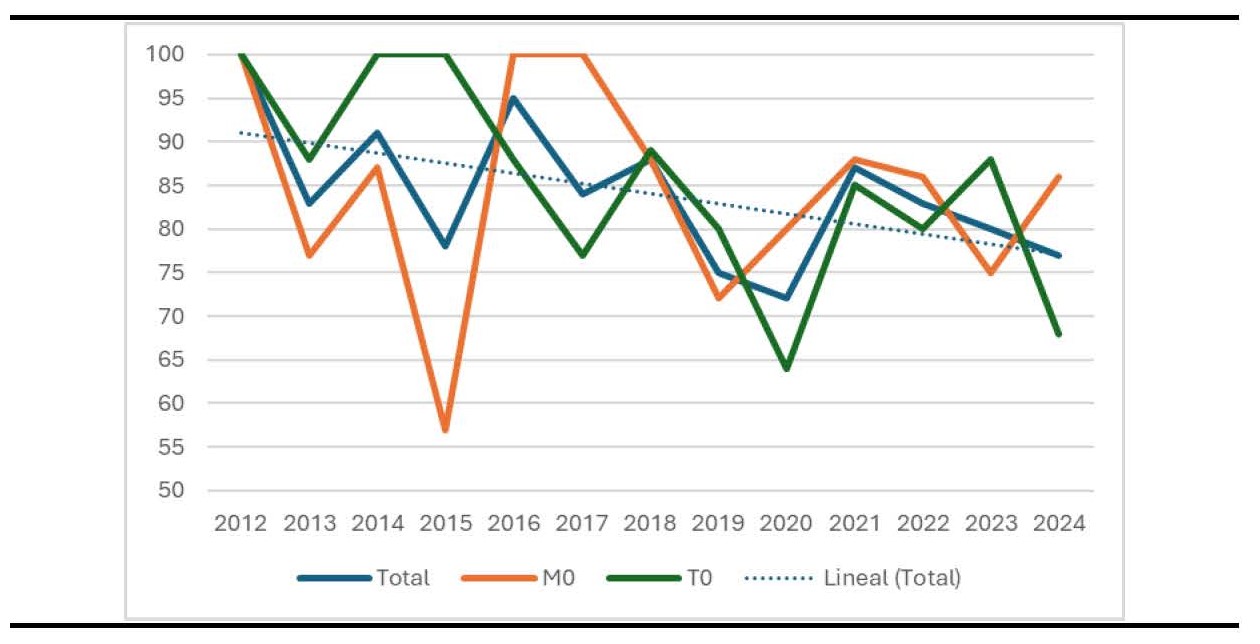
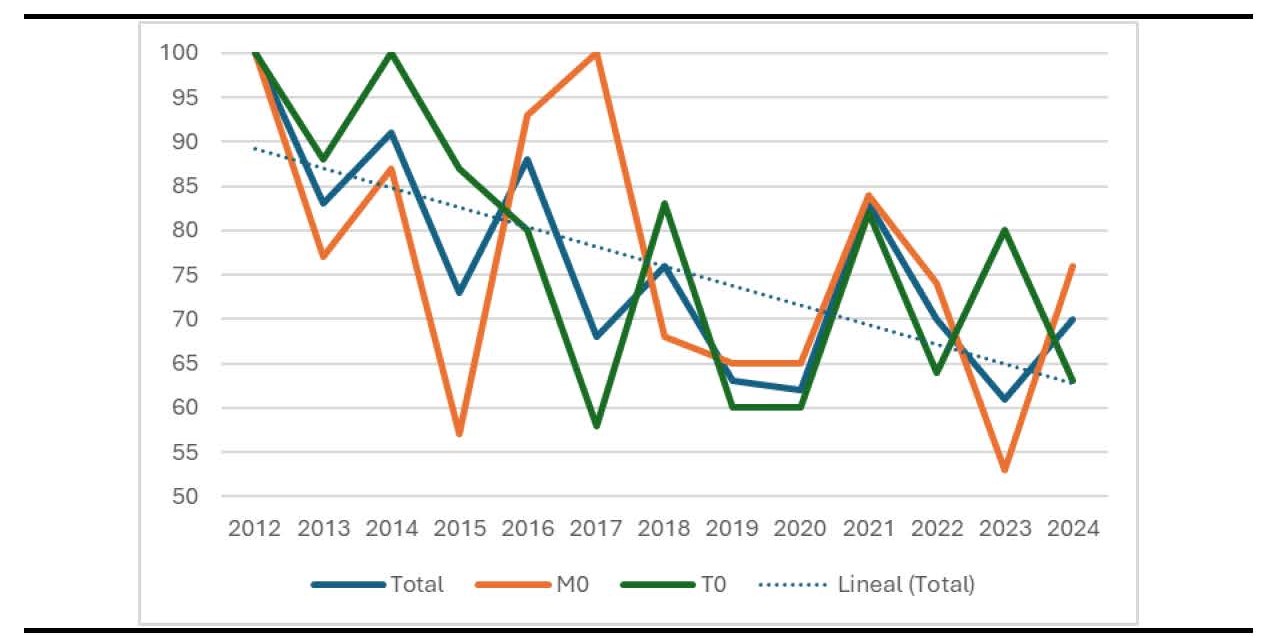
Figures 2 and 3 present the pass and success rates over more than a decade. The former considers the total number of enrolled students, whereas the latter excludes from the denominator those who did not sit the exam. In both cases, and despite the reasonable variation between groups and academic years -the average performance within groups are very sensitive to outlier values, given the small size of the groups-, a clear downward trend can be observed. There is no clear dominance of one group over the other in terms of performance. It is worth noting, however, that the afternoon group’s results improve relative to those of the morning group when the effect of absentees is excluded (see Figures 2 and 3). This may be attributable to the higher proportion of students who combine work and study, as well as repeaters, enrolled in the afternoon group. Indeed, the inclusion of the success rate alongside the pass rate sought to rule out the potential effect of students who did not take the exam. It is noteworthy that, once the effect of non-attending students is discounted (Figure 3), the negative trend becomes even more pronounced.
Figure 2. Pass ratesa in the course Economic Evaluation of Public Policies. Groups M0, T0, and overall, academic years 2012/13 to 2024/25.
Source: Authors’ own elaboration.
Note: a Pass rate: percentage of students who successfully complete the course in relation to the total number enrolled.
Figure 3. Success ratesa in the course Economic Evaluation of Public Policies. Groups M0, T0, and overall, academic years 2012/13 to 2024/25.
Source: Authors’ own elaboration.
Note: a Success rate: percentage of students who successfully complete the course in relation to the total number enrolled, excluding those recorded as did not attend.
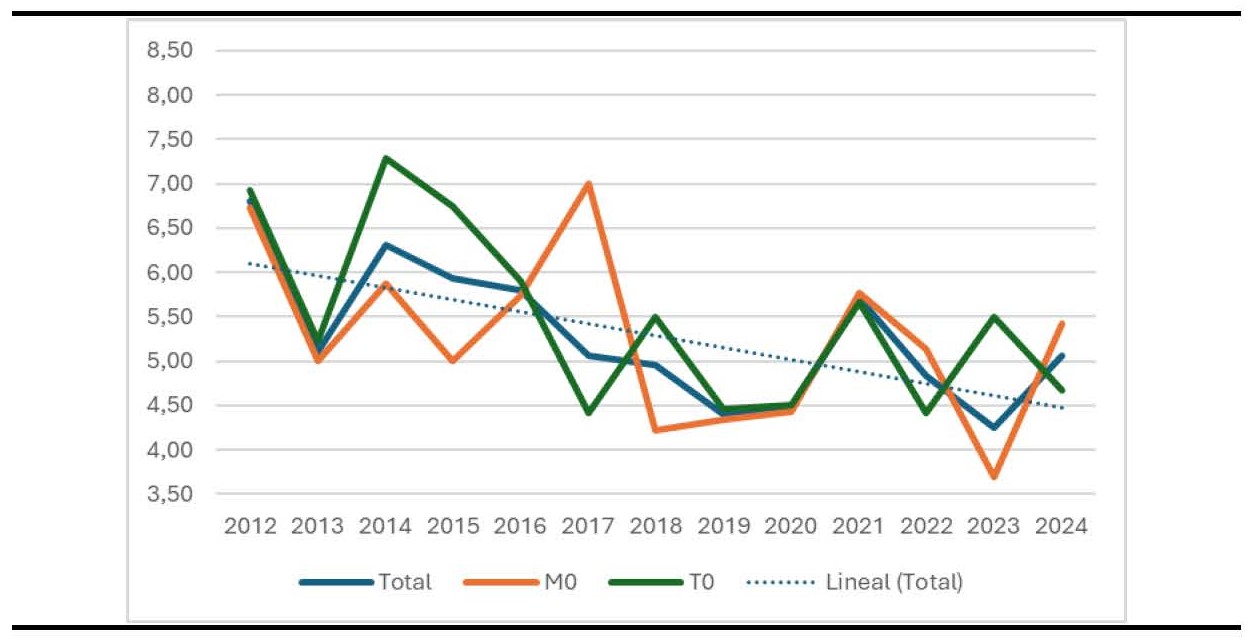
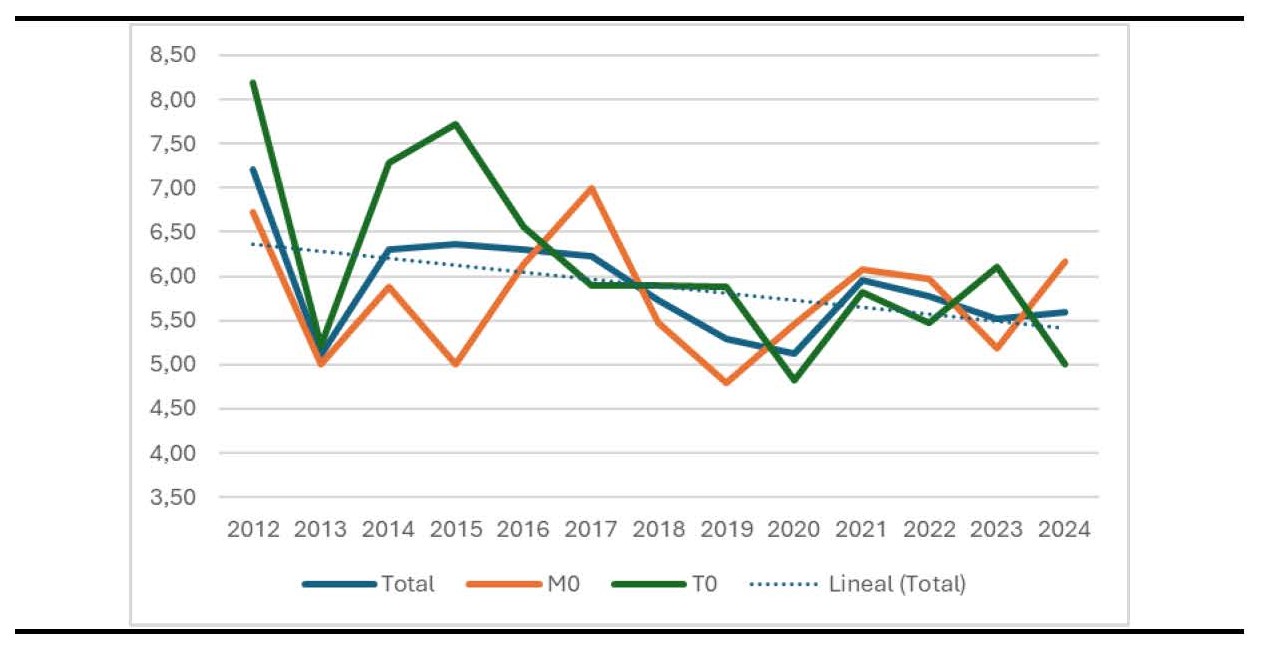
The declining pass and success rates have been accompanied by a drop in the average student scores. Figures 4 and 5 illustrate this trend. From average scores above 6 points in the 2012/13 academic year, the mean fell to below 4.5 points in 2023/24 (Figure 4). Excluding students who did not sit the exam (Figure 5) slightly softens the negative trend, yet a decline of nearly one point is still observed between 2012/13 and 2023/2024. In some years, the afternoon group outperformed the morning group, and vice versa. However, when calculating the average performance across the 2012/13 to 2023/2024 period, students in groups M0 and T0 achieved a mean score of 5.24 points. When excluding non-attending students, the morning group obtained an average of 5.73 points, compared with 6.24 points for the afternoon group, indicating a greater incidence of non-attending students in the morning group.
Figure 4. Average score a of students enrolled in the course Economic Evaluation of Public Policies. Groups M0, T0, and overall, academic years 2012/13 to 2024/25.
Source: Authors’ own elaboration.
Note: a Distinction, 10 points; Excellent, 9; Very Good, 7; Pass, 5; Fail, 3; Did not attend, 0. The average grade is calculated based on the total number of enrolled students.
Figure 5. Average scorea of students who sat the final examination in the course Economic Evaluation of Public Policies. Groups M0, T0, and overall, academic years 2012/13 to 2024/25.
Source: Authors’ own elaboration.
Note: a Distinction, 10 points; Excellent, 9; Very Good, 7; Pass, 5; Fail, 3. The average grade is calculated based on the total number of students who sat the exam.
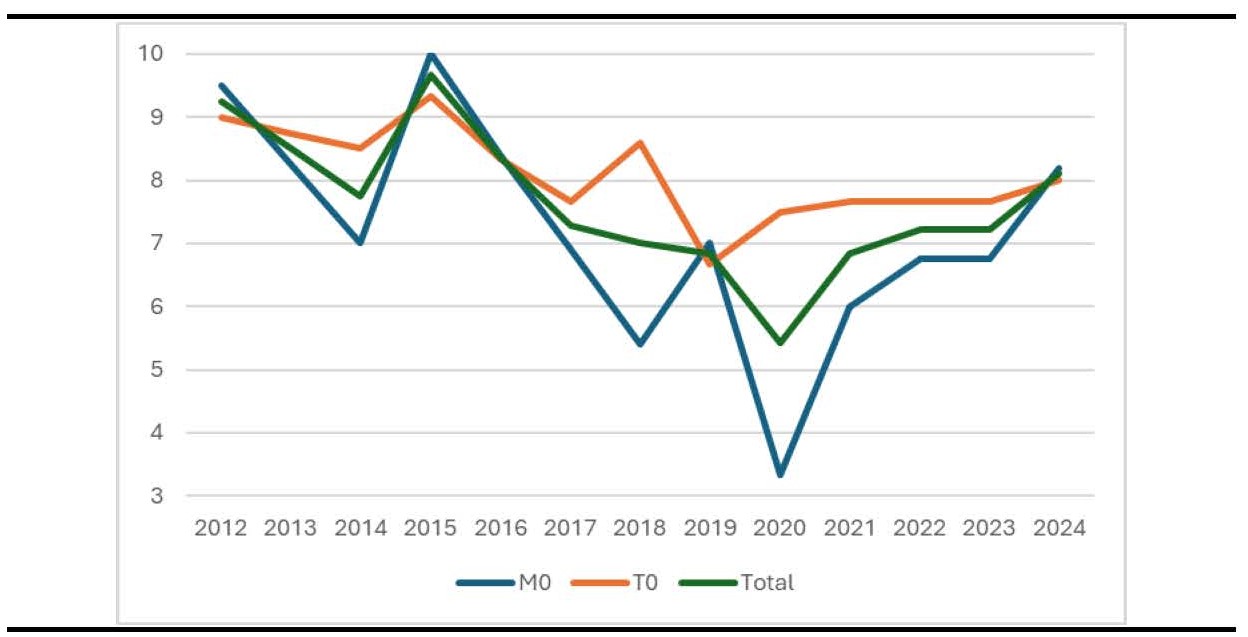
The previous figures have presented objective indicators of performance. Figure 6 introduces a subjective indicator of perceived teaching quality, namely student opinion surveys. Despite their multiple limitations -low response rates, changes in the questions asked, selection bias, among others (Radchenko, 2020)- they constitute a qualitative indicator that can complement the information provided in Figures 1 to 5. It is worth noting that, despite repeated encouragement from teaching staff for students to complete the surveys -dedicating class time to this purpose and given that the course itself deals with the evaluation of public activity- the number of responses per academic year and group was very limited. The transition to online surveys reduced the possibility of controlling response rates, and the results also revealed a polarisation of opinions.
Figure 6. Student evaluation of teaching quality in the course Economic Evaluation of Public Policies. Groups M0, T0, and overall, academic years 2012/13 to 2024/25.
Source: Authors’ own elaboration.
Note: In the 2012/13 academic year (both groups) and in 2017/18 (group M0), the teaching evaluation scores were not provided to staff owing to the very low number of responses. The figures reported in Figure 4 for those groups and years correspond to the average of the ratings obtained in the preceding and subsequent years for the same groups. In 2023/24, once again, no scores were available for either group, given the insufficient number of responses -figures shown in the graph for that academic year are those for the previous year-.
In Figure 6, a downward trend can be observed from the 2015/16 academic year until 2022/23, at which point there appears to be a recovery to the level prior to the COVID-19 crisis. No scores are available for 2023/24, owing to the very limited response rate. However, the scores for 2024/25 rose to 8.2 for group M0 and 8.0 for group T0. Anyway, this claim should be interpreted cautiously due to the limitations in the student evaluation assessments and the limited (just one course) scope of the post-case-study period. In general, the afternoon group -characterised by a smaller number of enrolled students, tuition delivered in Spanish, the absence of Erasmus students, and a slightly older age profile- tended to award higher ratings than the morning group.
- DISCUSSION: ONE STEP BACK, TWO STEPS FORWARD?
The increase in class size, the evolution of performance indicators, the decline in class attendance after the COVID-19 crisis, and the rise in conflict linked to the enforcement of the attendance requirement (students were expected, let us recall, to attend 80% of sessions) led, in the 2024/25 academic year, to the abandonment of the case-study methodology and its replacement with a more traditional approach. This was based on lectures and three individual continuous assessment tests, each consisting of a set of ten short questions to be answered within a limited space, which together accounted for 50% of the final grade. As with the case-study exercises, only the two best marks out of the three tests were considered. The remaining 50% of the grade was obtained in a final examination consisting of ten short questions and a practical case in which students had to identify and justify the most appropriate evaluation technique to be applied.
The average scores of students who sat the final exam in 2024/25 were 6.17 and 5 points in groups M0 and T0, respectively. When compared with Figure 4, these are modest results. However, it must be considered that one of the observable changes in 2024/25, compared with the two preceding years, was the reduction in the number of students not attending the exam. Thus, when non-attending students are considered in the calculation of average performance (Figure 5), an improvement can be observed: the mean score increased from 4.84 and 4.25 points in 2022/23 and 2023/24, respectively, to 5.06 in 2024/25. As noted earlier, students also gave a positive evaluation of the more “traditional” teaching approach implemented in 2024/25. It must be acknowledged, however, that part of the improvement in performance in this latter year may be attributable, in group M0, to the reduction in class size. The results of forthcoming academic years will allow this trend to be confirmed.
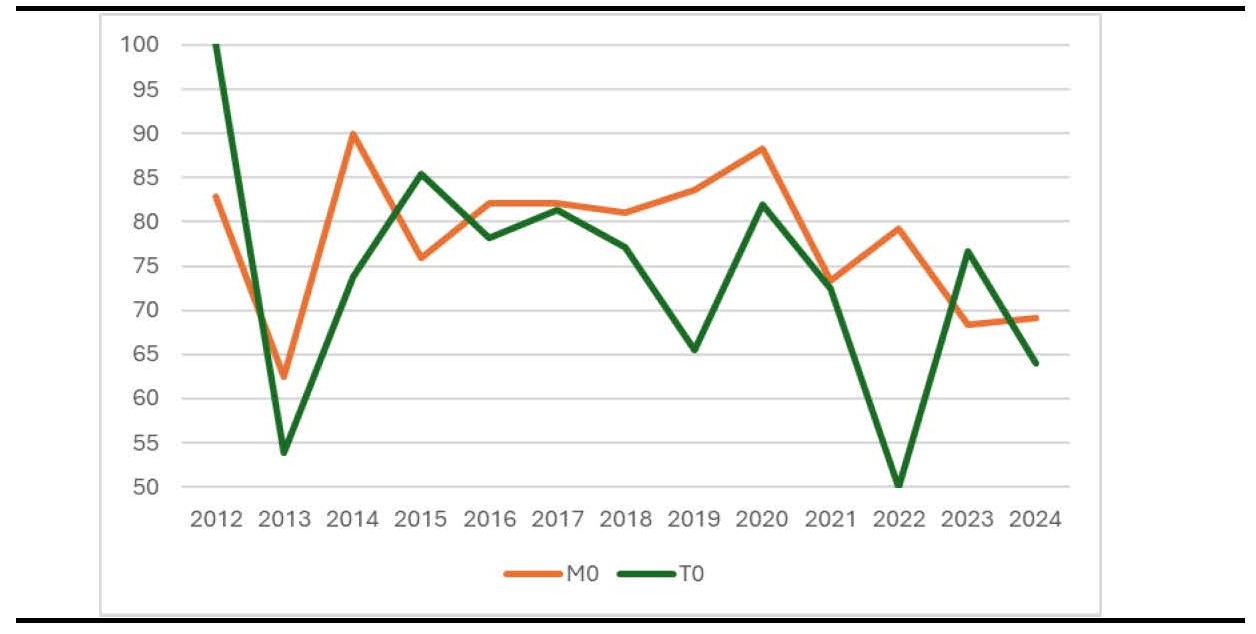
Anyway, we acknowledge that a potential threat to the validity of the interpretation of our results could come from the existence of general trends in the Political Science and Administration undergraduate programme. That is, that the trends shown in Section 3 were shared by all the subjects in the programme. To discard this possibility, we reviewed the evolution of the results of the success rates (comparable to Figure 3) for the Public Economics subject taught in the fourth year -as EEPP- of that grade. Public Economics is also an optimal subject for comparison as it shares economic contents, it is co-taught by the same lecturer as EEPP and has not experienced shifts neither in its lecturing team, methodology nor evaluation system -namely, traditional lecturing with some mid-term exams and a final exam-. Figure 7 follows a very different pattern to that presented in the analogous figure for EEPP (Figure 3), this allowing us to discard the existence of general trends, at least across the economics-contents based subjects. Moreover, some of the students were enrolled in both subjects simultaneously.
Figure 7. Success ratesa in the course Public Economics. Groups M0 and T0, academic years 2012/13 to 2024/25.
Source: Authors’ own elaboration.
Note: a Success rate: percentage of students who successfully complete the course in relation to the total number enrolled, excluding those recorded as did not attend.
The case described highlights the tension between the dominant institutional discourse, which promotes and rewards teaching innovation -at the University of Barcelona even allowing reductions in teaching load- and equates it with “teaching quality,” and, on the other hand, student needs and budgetary constraints. Indeed, during the initial years of the course, the potential of teaching innovation and active methodologies -case studies, in particular- for improving knowledge transmission was clearly observed. However, this case also describes some of the conditions necessary for their success and the importance of institutional support.
As for the former, students’ prior knowledge and class size (i.e. the number enrolled) appear to be correlated with performance. In its early years, the course was delivered in Spanish to final-year students in very small groups. In 2018/19, the course was moved to the autumn semester in order to increase enrolment: this change meant that a significant proportion of students had not previously taken Public Finance, the subject that provides the theoretical foundation for part of the content addressed in Economic Evaluation of Public Policies. Furthermore, in 2021/22, the morning group was opened to Erasmus students, most of whom came from disciplines other than Political Science and Public Administration, as very few courses were offered in English in the Faculty of Law at the University of Barcelona. As can be seen, budgetary restrictions -increasing student numbers per class- or the desire to “internationalise” the Faculty’s teaching prevailed over other considerations of teaching quality. As it may be seen in the figures presented in Section 3, a major break in the trends between the performance between both the morning and afternoon groups occurs since course 2021/22, when there is an important shift in the number of students in the morning group. This suggests that the increase in the class size may partially explain the trend in performance we observe, for both groups, since the enrolment rates increased in 2019.
Thus, a collision arises between the institutional discourse (“demand”), which requires teaching staff to deliver greater internationalisation, personalised attention and active learning methodologies, and the conditions provided (“institutional supply”) for the implementation of these requirements. This case clearly shows how the progressive deterioration of that supply has gradually reduced the degree of satisfaction in meeting institutional demand. Accordingly, in this course, internationalisation, personalised attention, and the use of active learning methodologies have been undermined by:
- The lack of institutional control over students’ prior knowledge: this is important for students of Political Science itself, but even more so for international students from other disciplines.
- The lack of control over English-language proficiency: each year, students have been enrolled in the morning group, taught in English, without the minimum level required to follow the course.
- The increase in both the number and heterogeneity of enrolled students. Kokkelenberg et al. (2008) note that the steepest decline in student performance occurs when moving from small groups (fewer than 30 students) to medium-sized ones. It should be recalled that, simultaneously, the class size rose from 30 to 45 students, with a large share being Erasmus students from outside Political Science.
- The absence of institutional support in certain conflict situations, such us when the Faculty requested exceptions for students who had not meet the attendance requirements necessary to follow the case-study methodology.
- The lack of suitable spaces for group work: for instance, for several years lessons were held in rooms poorly adapted to group work, with, for example, rows of desks fixed to the floor.
While the lecturing team introduced several adjustments in the methodology -regular renewal of cases; use -when available- of classrooms more fit for the implementation of case studies; reduction in the contents -lesson 3, as explained before, was dropped- and adaptation of quantitative contents to non-economists-, it is true that they did not explore, when facing some of the hurdles described by Proud (2022), the possibility of applying other types of active learning methodologies before moving back to the traditional “chalk and talk” model.
Crucially, the results reported in this paper should encourage exploration of hybrid or scaffolded alternatives that preserve the pedagogical advantages of case-based work while reducing its vulnerability to the exact problems encountered. Indeed, several approaches have been suggested. The Team-Based Learning (TBL) model -which combines individual pre-class preparation, readiness assurance tests and stable team activities- has accumulated evidence of positive effects on engagement and learning outcomes across disciplines (Alizadeh et al., 2024). More specifically, the recently proposed TaBLE (Team-Based Learning and Evaluation) Case Method embeds structured team phases within case teaching and has been evaluated explicitly as a remedy to some of the common challenges of undergraduate case pedagogy (Wright et al., 2024). In addition, Problem-Based Learning (PBL) and scaffolded case formats -where students complete clearly defined individual preparatory tasks before group work, and where cases are shorter or more tightly structured- also have a substantial evidence base. Meta-analyses suggest modest but meaningful positive effects of the latter on problem-solving and critical thinking, if implementation fidelity is ensured (Walker et al., 2009; Mahdi, et al., 2020; Qin et al., 2016). Operationally, such hybrids could be trialled by: (i) reducing the frequency or length of in-class case sessions while increasing individual, pre-class assessments; (ii) creating smaller, stable teams with explicit peer-assessment to increase accountability; (iii) employing digital, asynchronous case materials or virtual simulations to reduce pressure on physical space; and (iv) introducing minimal entry requirements or preparatory modules (quantitative skills, English for specific streams) to homogenise baseline readiness.
Naturally, and particularly in a course linked to Public Economics, the existence of budgetary restrictions and the need to apply efficiency criteria are understandable. In fact, whether this affects educational quality depends on the definition adopted for the concept of quality. The case described shows that if quality is equated with internationalisation, personalised attention and teaching innovation, then budgetary restrictions can indeed negatively affect teaching quality. However, if teaching quality is identified solely with an improvement in pass rates, no such negative effect is observed -albeit at the cost of a deterioration in internationalisation, personalised attention and innovation in teaching practice- in the reversion of the evaluation system since the 2024-25 course.
- CONCLUSIONS
This article has examined the evolution of the fourth-year undergraduate course Economic Evaluation of Public Policies (Political and Administrative Sciences, University of Barcelona), with particular emphasis on the adoption, consolidation and eventual rollback of a case-based methodology. What began as a carefully designed and enthusiastically received innovation -intended to foster critical analysis, teamwork and applied problem solving- ultimately coincided with a progressive deterioration in several objective performance indicators and in some elements of student feedback. The central lesson is that pedagogical innovation per se is insufficient: the success of active methods is contingent on coherent institutional support, appropriate cohort composition, adequate physical and administrative resources, and ongoing alignment between pedagogical aims and operational constraints.
The evidence presented suggests several plausible determinants of the observed deterioration in performance. First, increasing heterogeneity in students’ academic background (notably quantitative skills and, for the English group, language proficiency) reduced the capacity of all students to benefit uniformly from group-centred case work. Second, the expansion of class size and attendant changes in group composition appear to have eroded the close, formative interactions that case-based teaching ordinarily requires; prior evidence has demonstrated that class-size effects are non-trivial, with increases from small to medium cohorts depressing average grades and attenuating the benefits of interactive pedagogies (Bandiera et al., 2010; Kokkelenberg et al., 2008). Third, logistical constraints (inadequate rooms for free-form group work) and inconsistent enforcement of attendance and participation rules undermined mechanisms of individual accountability within teams, thereby raising the risk of free-riding and reducing collective engagement. Finally, institutional priorities (e.g., enlargement of enrolment, rapid internationalisation without sufficient screening) shifted incentives in ways that rendered sustained implementation of the case method problematic in practice. Similar challenges with case-based instruction in higher education -such as mismatches between institutional rhetoric and operational realities- have been reported elsewhere (Rosier, 2022).
Given these constraints, the decision to revert to a more traditional combination of structured lectures and standardised individual assessment was, in the circumstances, defensible. Traditional formats afford greater control over content coverage and comparability of assessment outcomes, are simpler to administer at scale and are less sensitive to variability in prior student preparation and attendance. In the present instance, the partial recovery in mean performance and in student appraisal following the return to a more conventional assessment regime suggests that, under restrictive resource and organisational conditions, stability and clarity of expectations can mitigate some of the adverse outcomes associated with a poorly supported active-learning deployment. Nevertheless, this pragmatic rationale should not be interpreted as an argument against active learning in principle; rather, it highlights that method selection must be calibrated to available supports.
This article allows extracting a series of questions that lecturers interested in applying the case study methodology to their public economics course may find useful asking themselves before proceeding to its effective implementation. Does the lecturer have time to prepare and periodically renew the cases? Do the students have sufficient theoretical background/ time for self-study to face applied case-studies in class? Are the classrooms adapted to the needs of the methodology? Is the class size below a reasonable 30-35 students- threshold? Is the level of engagement of the students high enough to ensure high attendance levels during the whole semester? In case students do not attend, will there be institutional backing to the academic consequences derived from absenteeism -case-study methodology requires class attendance-? While active learning methodologies can enhance learning processes -and the case presented provides a good example-, the experience described in this paper shows that a negative answer to any of the former questions -not to say the accumulation of them- may jeopardise the success of this shift.
Ultimately, this case also raises a broader reflection: teaching methodology must remain at the service of prevailing circumstances rather than becoming an end in itself. While genuine pedagogical innovation can enhance learning and motivate both students and teaching staff, it should not be pursued merely as a performative goal or as a marker of institutional prestige.
The effective incorporation of emerging tools -such as artificial intelligence for personalised feedback, formative assessment or case-simulation design- may indeed offer opportunities to revitalise active learning. Yet, without careful alignment of institutional discourse and classroom practice, there is a risk that innovation becomes symbolic rather than substantive, widening the gap between what universities claim to promote and what lecturers can realistically deliver. For academic staff, therefore, the key question is whether innovation serves the learning needs of their students under existing constraints, rather than whether innovation itself constitutes a professional objective.
To conclude, we acknowledge this paper has several limitations. Primarily, it is a single-case study situated in one institution and on one course, which constrains external validity. Secondly, the empirical indicators available -aggregate pass and success rates, average grades and low-response student surveys- are imperfect measures and may conflate the effects of pedagogy with contemporaneous institutional and curricular changes; we therefore do not claim causal attribution by any means. Thirdly, the qualitative evidence (student comments, teaching reflections) is partial and potentially biased by low response rates and self-selection. Future research would benefit from multi-course or multi-institution comparative designs, pre-registered interventions (for example, randomised or phased implementation of hybrid methods), and more granular measurement of mediating variables (individual attendance, preparatory work completion, intra-team peer ratings) to disentangle the mechanisms that make active methods succeed or fail in specific contexts.
REFERENCES
Alizadeh, M., et al. (2024). Team-based learning in health professions education: An umbrella review of systematic reviews. BMC Medical Education, 24, 6147.
Anderson, B. (2019). Teaching developmental theory with interrupted video case studies. Journal of the Scholarship of Teaching and Learning, 19(5).
Bandiera, O., Larcinese, V., & Rasul, I. (2010). Heterogeneous class size effects: New evidence from a panel of university students. The Economic Journal, 120(549), 1365-1398.
Berrell, M., Wrathall, J., & Wright, P. (2001). A model for Chinese management education: adapting the case study method to transfer management knowledge. Cross Cultural Management: An International Journal, 8(1), 28-44.
Bonney, K. M. (2015). Case study teaching method improves student performance and perceptions of learning gains. Journal of Microbiology & Biology Education, 16(1), 21-28.
Choi Á., Escardíbul, J. O., & Mediavilla, M. (2014). What a Difference a Case Makes: Teaching Economic Evaluation of Public Policies to Non-Economists. E-pública, 2014, 15, 33-47.
Fixen, M. (2024). Learning through case studies in higher education. Journal of Higher Education Theory and Practice, 24(5), 72–82.
Farashahi, M., & Tajeddin, M. (2018). Effectiveness of teaching methods in business education: A comparison study. The International Journal of Management Education, 16(1), 131–42.
Grant, R. (1997). A Claim for the Case Method in the Teaching of Geography, Journal of Geography in Higher Education, 21 (2), 171-185.
Kokkelenberg, E. C., Dillon, M., & Christy, S. M. (2008). The effects of class size on student grades at a public university. Economics of Education review, 27(2), 221-233.
Laughlin P.R., Hatch E.C., Silver J.S., & Boh L. (2006). Groups perform better than the best individuals on letters-to-numbers problems: effects of group size. J Pers Soc Psychol., 90(4), 644-51.
Mahdi, O. R.; Nassar, I. A., Almuslamani, H.A.I. (2020). The Role of Using Case Studies Method in Improving Students’ Critical Thinking Skills in Higher Education. International Journal of Higher Education, 9(2), 297–308.
Proud, S. (2022). If you build it, will they come? A review of the evidence of barriers for active learning in university education. REIRE.
Revista d’Innovació i Recerca en Educació, 15(2), 1–14. https://doi.org/10.1344/reire.38120
Qin, Y., Wang, Y., Floden, R. E., & Bos, W. (2016). The effectiveness of problem-based learning on improvement of student outcomes: A systematic review and meta-analysis. BMC Medical Education, 16, 12.
Radchenko, N. (2020). Biases in student evaluations of teaching: An American case study. IZA Discussion Papers,13603.
Rosier, G. (2022). The case method evaluated in terms of higher education outcomes: A study of student approaches to learning. Teaching and Teacher Education, 115, 103714.
Toogood, C. (2023). Supporting students to engage with case studies: a model of engagement principles. Educational Review, 77(4), 1125–1139.
Walker, A., Leary, H., Hmelo-Silver, C. E., & Ertmer, P. A. (2009). A problem-based learning meta-analysis: Differences across problem types, implementation types, disciplines, and assessment levels. Interdisciplinary Journal of Problem-Based Learning, 3(1), 6–28.
Walsh, C. (2008, April 17). From Law School to Business School: Evolution of the Case Method. Harvard Gazette. https://news.harvard.edu/gazette/story/2008/04/from-law-school-to-business-school-evolution-of-the-case-method/
Wright, A. L., Irving, G. L., Pereira, S., & Staggs, J. (2024). An instructional innovation that embeds group learning in case teaching: the table case method. Journal of Management Education, 48(3), 526-563.